

Delivery Guide: Plan a Smooth Truss Delivery
A delivery that lands right
starts before the truck does.
The most common cause of a late delivery isn't the truck. It's the site. Here's how to prepare your job site, what our fleet can reach, and the road rules that shape your delivery window.
Why preparation matters
The site makes or breaks the delivery
We work as closely with you as possible through the whole delivery process, but a smooth delivery depends as much on your site as on our fleet. We need solid detail on the width, height, depth, condition, and location of the delivery site to bring the right equipment the first time.
Be transparent about the site from the start. The most common reason a delivery runs late is a discrepancy between the space we were told to expect and the space that's actually there when the truck arrives. A few minutes of honest detail up front saves hours on delivery day. In many cases, a quick video of the site tells our team exactly what equipment the job needs.
Preparing your site
What we need to know before delivery day
Access is the single biggest factor. We use more than one truck per job, so the space has to fit the length of the assigned equipment. The clearer the picture, the smoother the lift.
Access & space
How a truck gets in and how much room it has once there. Discrepancies in allotted space are our number-one cause of late deliveries, so be clear and honest from the start.
Dimensions & ground
Width, height, and depth of the delivery area, plus ground condition. Cranes need a firm surface. Very soft ground can prevent safe operation.
Slope & obstacles
Steep driveways and upward slopes limit how high a stiff boom can reach. Flag building height, overhead lines, and tight turns early.
Send a video
A quick walkaround video is the single most useful thing you can send: it lets our delivery team choose the right equipment before we roll.
Conflicting trades
Flag any other deliveries or services scheduled the same day. Knowing the day before helps us avoid a jammed site and a stalled lift.
Be ready on the day
Have the site clear and someone available to receive. The more prepared the site is on delivery day, the faster the crew is in and out.
Scheduling
How your delivery date gets set
New jobs go into our system with dates set by your needs and our current lead time. Once your order is confirmed, our shipping team reaches out early to introduce themselves and manage your delivery personally.
One-on-one contact
A direct line to the team handling your site, not a dispatch queue.
Regular check-ins
We stay in touch through the pre-delivery process up to the day before, confirming access and any scheduling conflicts.
Built close to delivery
Trusses are made near your scheduled date, so last-minute site changes can still be accommodated.
Equipment & fleet
What our trucks and cranes can do
Knowing the fleet's capabilities (and its limits) helps you understand what's possible at your site.
What does the Alliance fleet include?
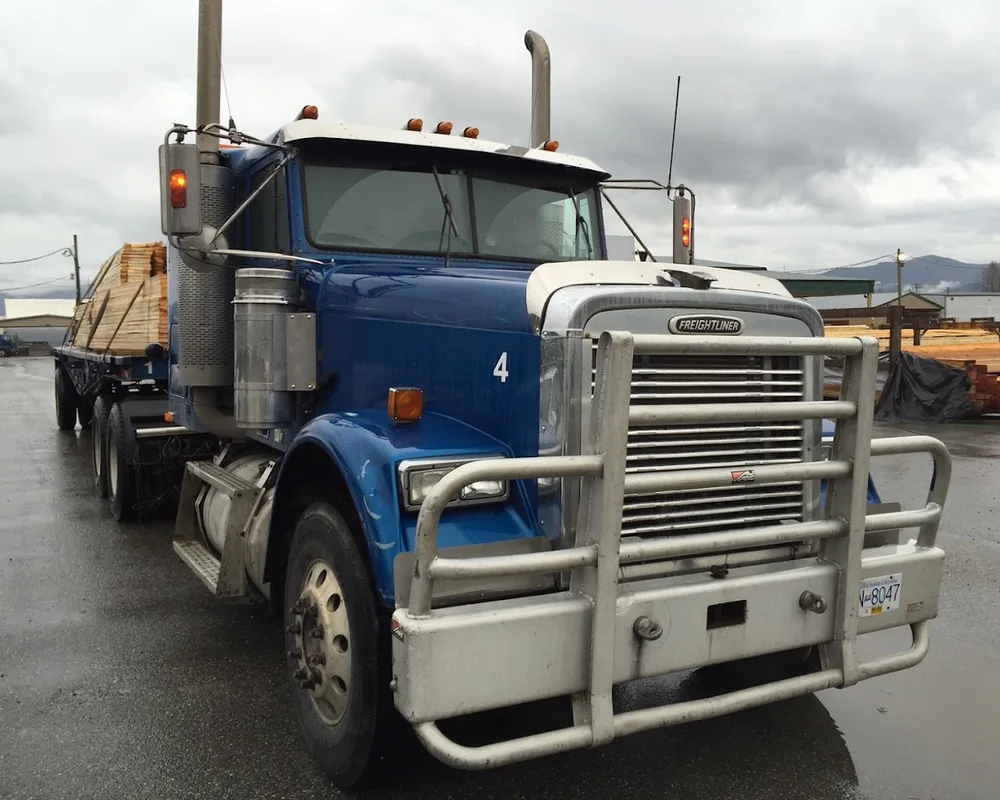
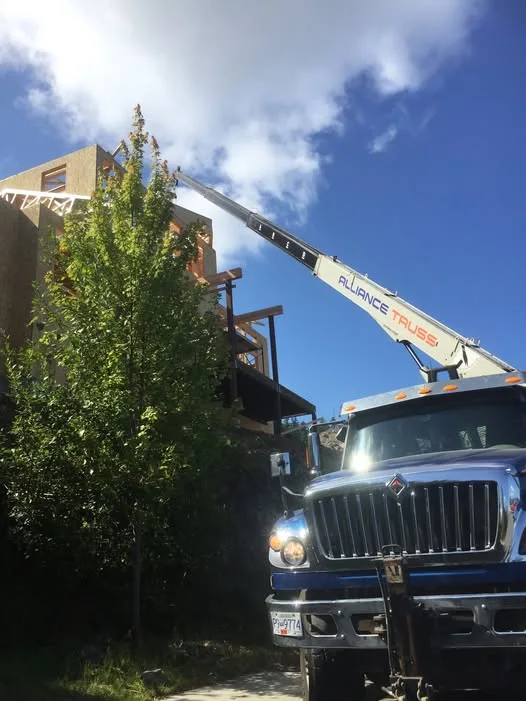
A fleet of 17-ton stiff boom cranes, two tractors for pulling large trailers, and two small flat decks for Vancouver-area deliveries. It's built to complement our core business of manufacturing and delivering trusses and wall panels across the Lower Mainland and Fraser Valley. Freight and flat-deck trucks are also available for smaller deliveries.
How high can the cranes reach?
Our in-house cranes reach a maximum of 75 feet. Actual reach on any job depends on driveway slope, building height, and load weight: lifting higher and heavier reduces effective reach. If a job needs more height, we can arrange a third-party crane, which may carry additional cost.
How long are the trucks and trailers?
Trucks are 25 feet long and trailers run 20 to 40 feet. Booms reach up to 75 feet, depending on lift height and load weight. This is why site length and access matter: the assigned equipment needs room to set up and operate safely.
What is a stiff boom crane, and will a 17-ton do my job?
A stiff boom crane uses a hydraulic winch to lift material, with the boom raising or lowering the load. They're precise, flexible in rotation and movement, and quick to operate, ideal for setting trusses. Whether a 17-ton suits your job depends on the site: steep driveways and upward slopes limit reach, and soft ground can prevent safe operation. In extreme cases a different crane is needed.
What if my site needs a different crane?
When a job calls for equipment we don't run in-house, such as a Hiab or a 40 to 80-ton crane, we work with trusted third-party crane companies to complete it. If we can't finish your job with one of our own cranes, we'll arrange the right machinery, at cost, as a service to you.
How is a crane different from a Hiab or pump truck?
Cranes are built for heavy lifting and rough terrain but must be hauled in by trailer, and they take up significant ground and open space that has to be accounted for before delivery. Pump trucks can drive independently. The right tool depends on the load, the reach required, and how much room your site has.
What are the main delivery limitations?
Most come down to the site itself: steep driveways, steep upward slopes, soft ground, excessive rain, length of reach, and extreme distances or heights. Identifying these early lets us plan around them, or bring the right equipment before delivery day rather than discovering the problem on site.
What are your safety protocols?
We take on-site safety seriously. The crane operator is the first point of safety while the crane is in operation, and we make sure our operators are briefed, trained, and ready to complete the job safely and on time.
On the road & on the invoice
Oversized loads & how delivery is priced
Truss loads usually exceed the maximum legal dimensions for Canadian roads, which directly affects when your delivery can arrive.
Over 10 ft 6 in wide, 14 ft 6 in high, or 82 ft long
Limited to daylight-hours travel only.
No Sundays
Oversized loads are not permitted on BC roads on Sundays.
Summer long weekends
June through September, no oversized travel between 2 pm Friday and 4 pm Saturday.
Delivery cost depends on your job, site location, and time involved. Our experience lets us estimate a reasonable delivery time, factored into the price. The fleet runs at a per-hour rate, and we also offer a flat rate that includes one hour of crane time for simpler, predetermined jobs. If your order has delivery considerations, tell your salesperson early; our shipping team can share average travel times so you know the cost up front.

Quick answers
Delivery questions, answered straight
What areas does Alliance deliver to?
We deliver trusses throughout the Lower Mainland and Fraser Valley, and serve customers across Western Canada and the United States through an extensive delivery network.
Why is site access so important?
It's the most common cause of delivery delays. We use more than one truck per job, so the site has to accommodate the length of the assigned equipment. Being clear and honest about available space from the start prevents day-of problems. A site video helps us determine the right equipment.
How does scheduling work?
New jobs are entered and dates set by your needs and our current lead time. Our shipping team contacts confirmed customers early and manages the schedule one-on-one, staying in touch up to the day before. Trusses are built closer to the delivery date so last-minute site changes can be accommodated.
What does delivery cost?
It depends on the job, site location, and time involved. The fleet runs at a per-hour rate, with a flat-rate option that includes one hour of crane time for simpler, predetermined jobs. For work needing equipment we don't run in-house, we outsource to third-party crane companies at cost, as a service to you.
Stop chasing your truss supplier
Deliver on the promise, keep the critical path.
Stop chasing quotes, handling late deliveries, and ending up with trusses that don't fit. Alliance has the experience and capacity to deliver on our promises and keep your build on schedule.